


The question
AI is arriving in onboarding from Day 1. We brought together practitioners who shape onboarding in their organisations to compare what they are actually doing, what they are considering, and where the line between AI and people is becoming hard to draw.
Not a panel, a presentation or a product demonstration: one conversation, starting from practice. We were not looking for consensus, but for experienced judgement made visible, including where people see things differently.
The conversation moved between three outcomes of successful onboarding, each in the new joiner’s own words:
Clarity
I understand where I am, what is expected of me and how work gets done here.
Connection
I know who to turn to, I can rely on the people around me, speak openly and feel part of the team.
Contribution
I can do useful work, handle the unexpected and improve the way we work.
Who was in the room
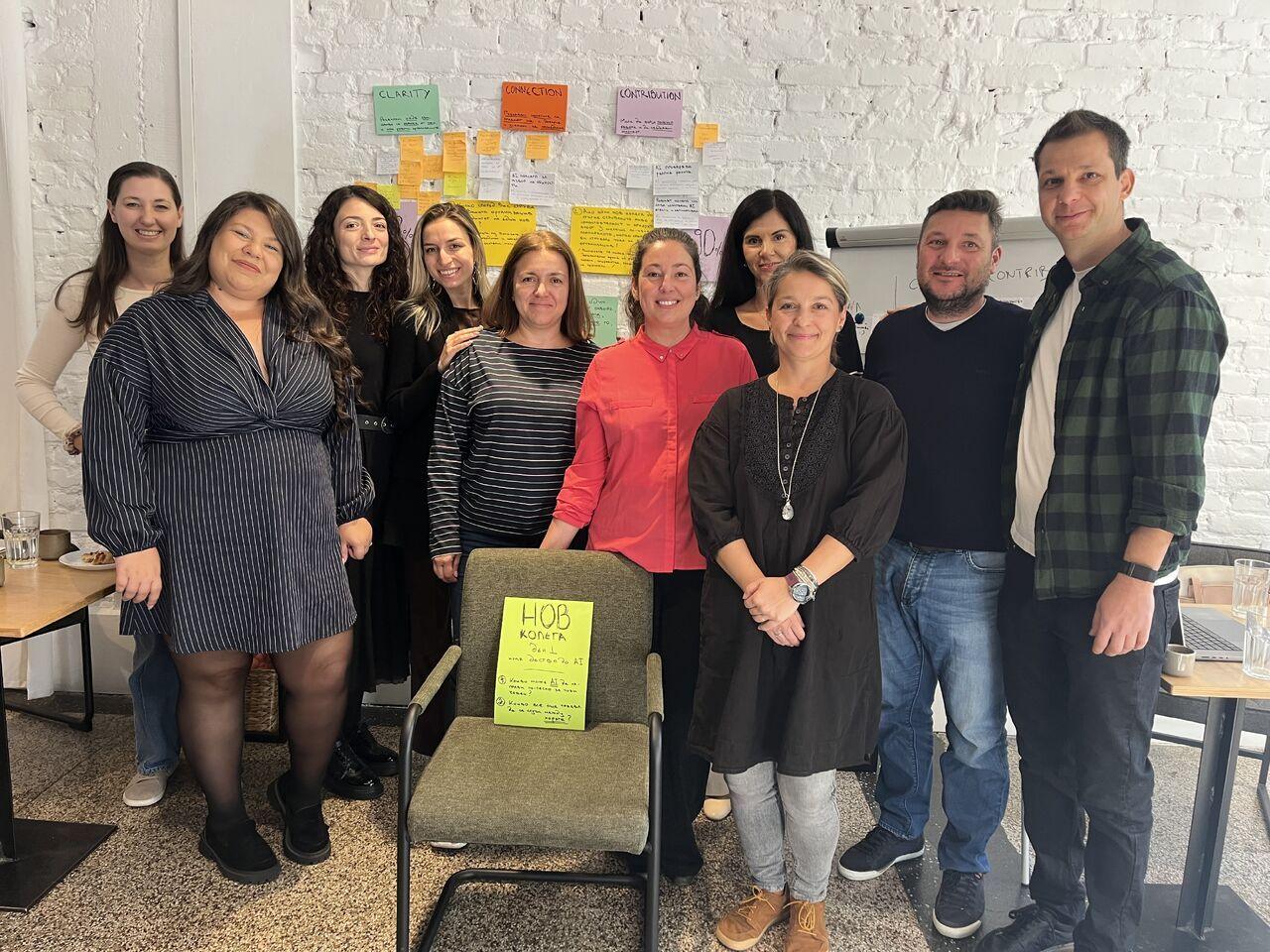
We invited people who shape how their organisations approach onboarding, each already using AI in it or actively experimenting. Different industries, organisations and levels of AI adoption: that difference was part of the value.
 Ivelina SlavovaIngram Micro
 Emil MinevExtreme Consulting
 Yoana StaykovaCobuilder
 Zlatka KraychevaCobuilder
 Reni KrasimirovaIntermedica
 Daria TopalovaPlaytech
 Elitsa PetrovaSAP
 Veronika TsvetanovaCoca-Cola
Hosts
Vesela has spent more than ten years shaping learning, employee experience and organisational culture at FinTech companies (Paysafe and Skrill). Between 2014 and 2021 she led onboarding programmes for hundreds of new team members.
Stavros has spent around two decades with teams and organisations as a software engineer, team leader, trainer, consultant and researcher. He created The Alignment Gap and The Alignment Lens, on the gap between what organisations intend and what teams actually understand and do.
Agenda
| Time | What happened |
|---|---|
| 09:00 | Arrival. Coffee, and one sentence to finish privately: “Onboarding has worked when a new joiner can…” |
| 09:30 | What onboarding costs. Two estimates from each organisation, then two numbers from a Bulgarian study. |
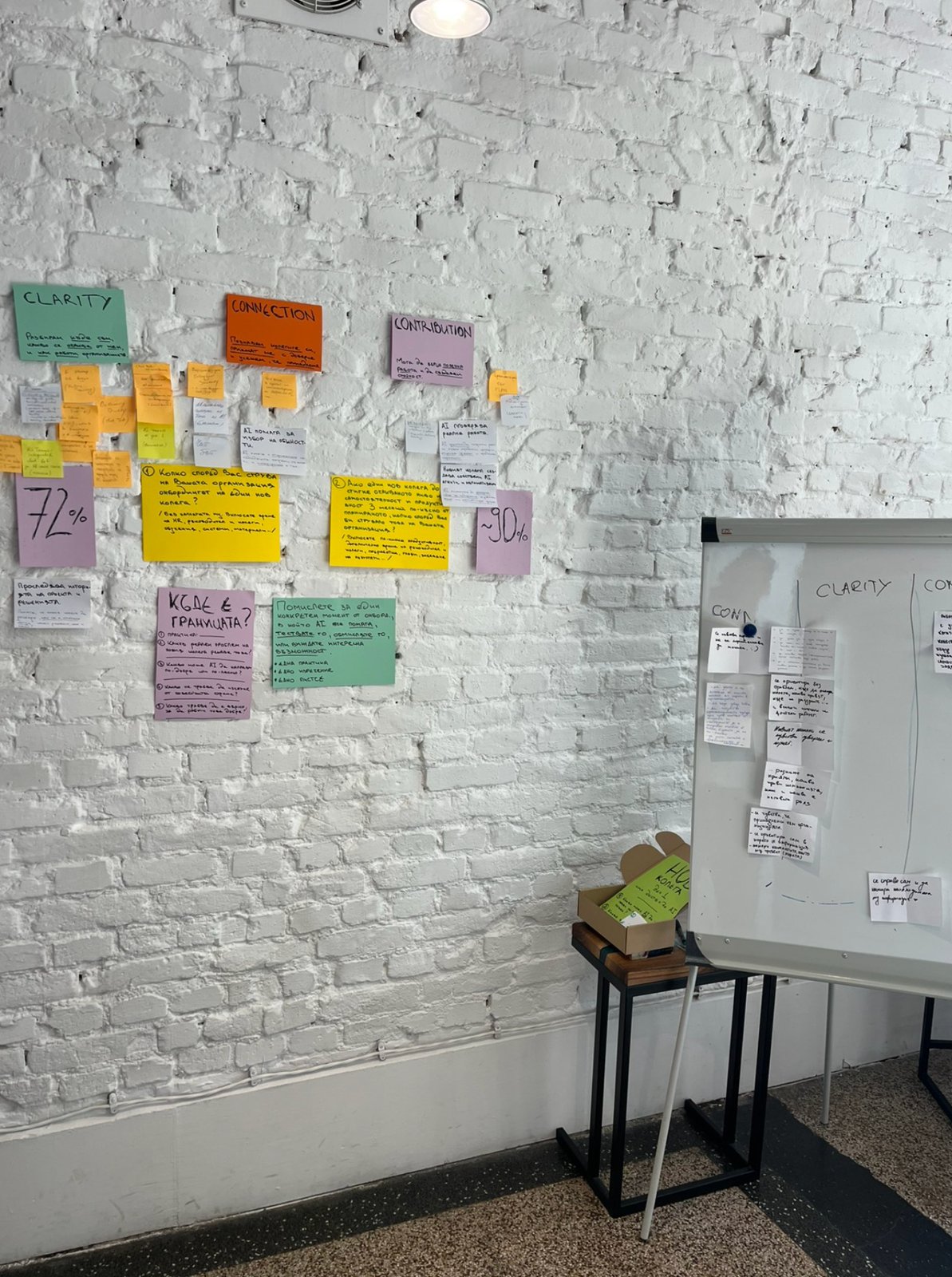
| 09:45 | What success looks like. The arrival cards go on the wall, around Clarity, Connection and Contribution. |
| 09:55 | The new joiner. An empty chair joins the table for the rest of the morning. |
| 10:00 | AI in practice. One practice from each organisation, then a few from our research. |
| 10:25 | Where is the boundary? Pairs take one practice through four questions. |
| 11:05 | AI and people. The whole group places what matters along one line, from AI to people. |
| 11:30 | Closing. What we missed, one thing to test next, and a letter to the future. |
| 12:00 | Coffee and conversation, until 12:30. |
The room
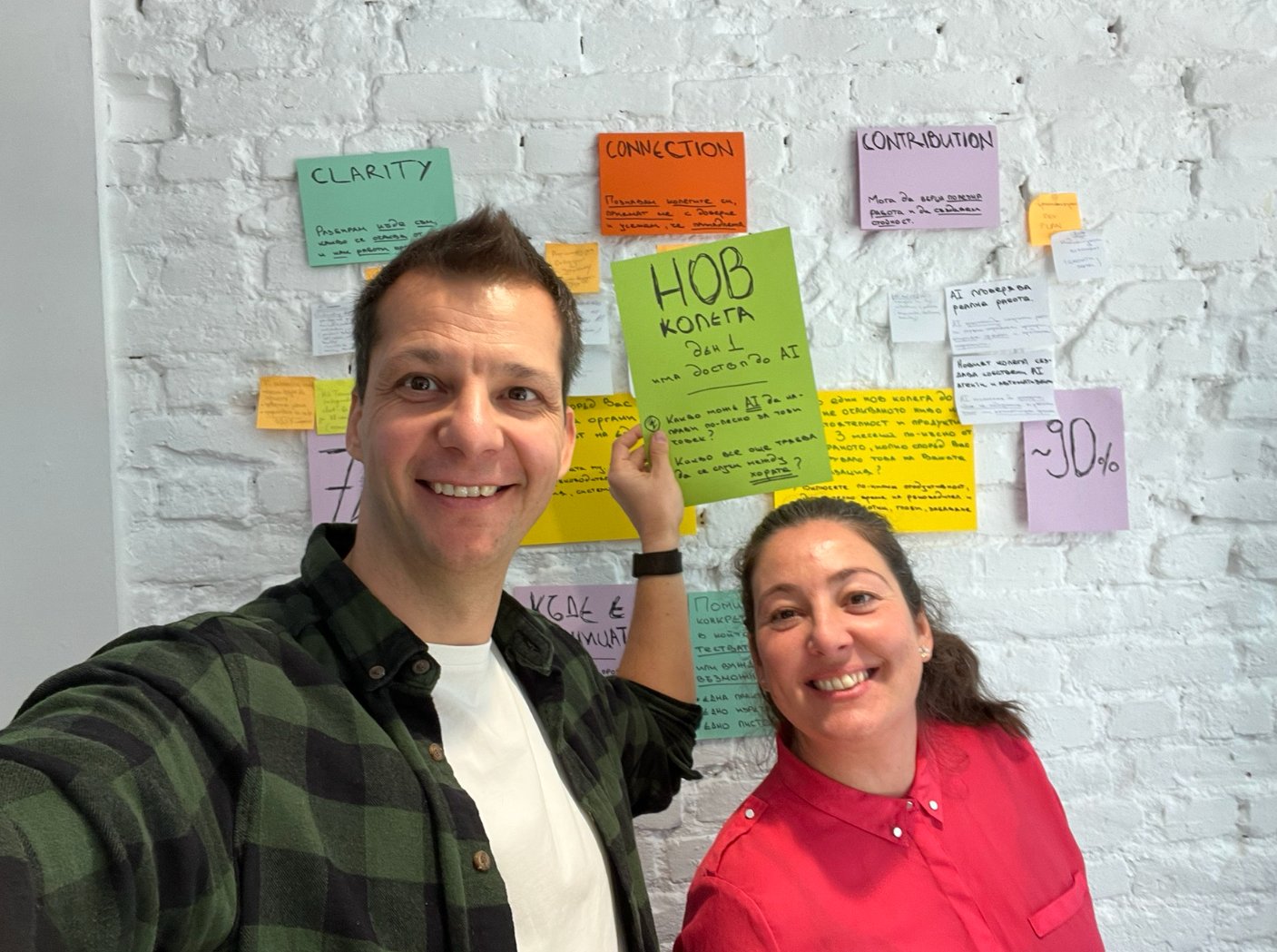
No stage and no slides: flipchart paper, sticky notes, markers, walls and one empty chair. The room started nearly empty; by noon, the group’s thinking was on the walls.
The empty chair
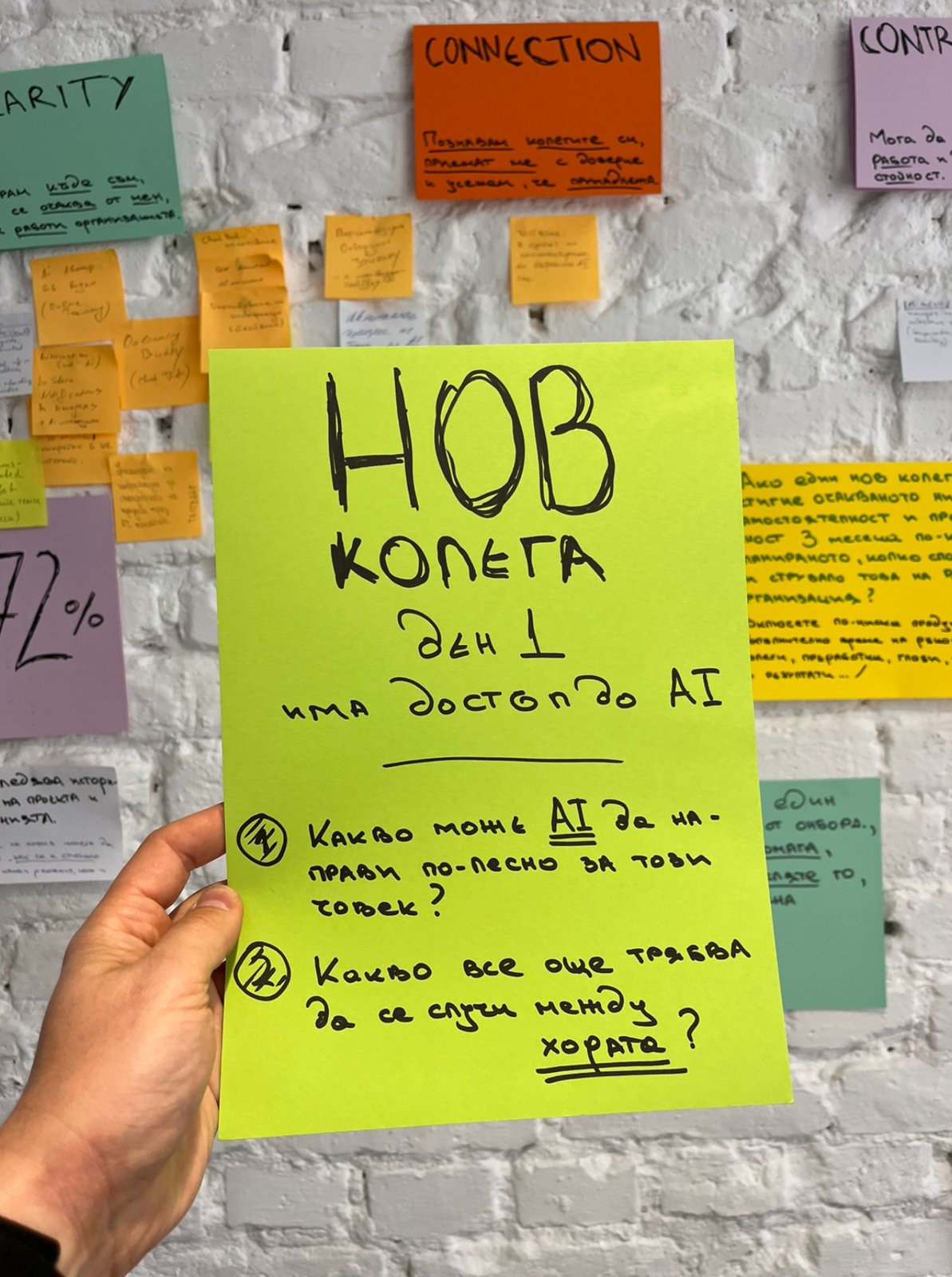
One person was missing from the conversation, so we kept a chair for them: not a role-play, a reality check. Whenever the discussion became abstract, we came back to it.
NEW JOINER
DAY 1
HAS ACCESS TO AI
- What can AI make easier for this person?
- What still needs to happen between people?
Where is the boundary?
In pairs, each with one practice from the wall:
- What real problem of the new joiner does this solve?
- What can AI do better or more easily?
- What must not disappear from the human side?
- What has to be true for this to work well?
The format
1One conversation, not a workshop
The structure is there so that every voice is heard and the thinking goes deeper. It should never become the experience.
2Private thinking first
Before the key questions, a minute to think or write, so people form their own view before hearing the most experienced voice in the room.
3Differences, not consensus
When views differ, we ask what each person is seeing, and under what conditions their answer would change.
4Research as a second voice
Participants bring their experience first. Only then do we bring a finding from our research and ask whether the room supports it, challenges it or adds something it missed.
Designed frame. Human content.
Each participant left with a sealed envelope bearing their name: “Open when your next new colleague starts.” Inside: one thing from the day not to forget, one thing to try, and the two questions from the empty chair.
What came out of it
The conversation, its recording and its transcript stay private. What we publish from it is aggregated and anonymised: a practitioner report that combines what the room saw with our review of research and international practice.
Practitioner Report · reports.executeos.comOnboarding in the AI EraWhat should AI make easier for a new joiner, and what still needs to happen between people?Read the report →